Affiliate Marketing for Beginners (Complete Guide for 2026)
For many people starting online, affiliate marketing sounds almost too simple. Recommend products, share links, and earn commissions when people purchase through those links.
Because the concept sounds easy, thousands of beginners enter affiliate marketing every year expecting fast money.
Then disappointment arrives.
Many publish a few links, write two or three articles, and expect income within days.
The reality looks very different.
Affiliate marketing can become a powerful income model, but successful websites usually build trust before revenue appears.
In 2026, search engines and users have become far better at identifying low-quality affiliate content. Thin reviews and spammy recommendations rarely survive long.
According to Google’s guidance on helpful content, websites should create people-first experiences instead of content designed only to manipulate rankings.
This guide explains affiliate marketing from a beginner perspective and shows how to build a sustainable strategy.
📌 What Is Affiliate Marketing?
Affiliate marketing is a model where you promote products or services and earn commissions when users complete actions through your referral links.
Usually these actions involve purchases, signups, subscriptions, or trials.
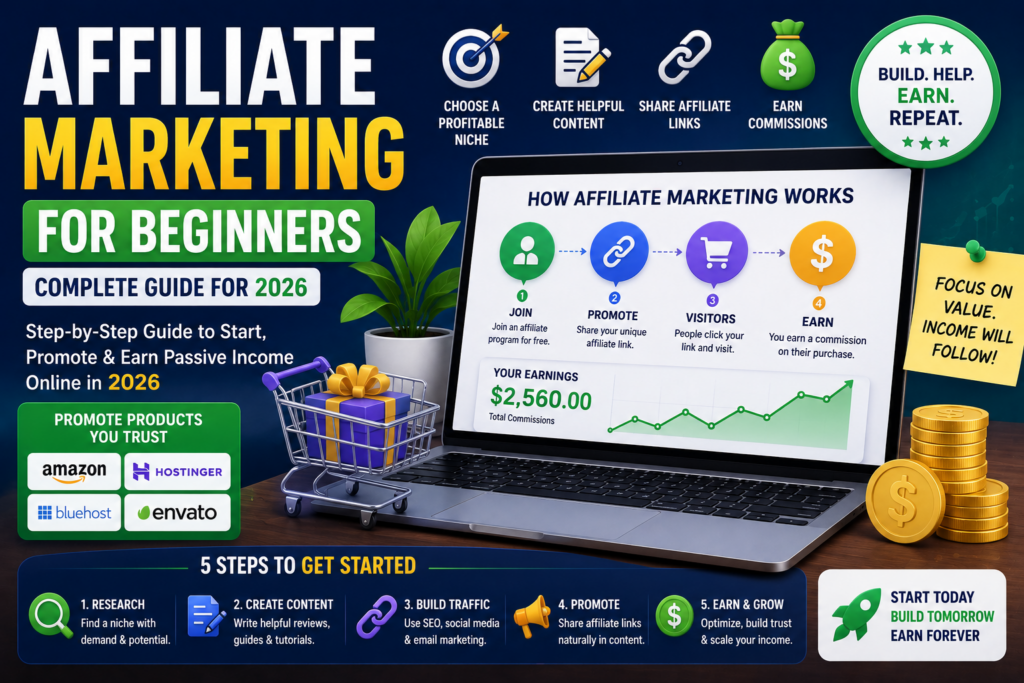
The process generally works like this:
You join an affiliate program.
You receive a unique tracking link.
You recommend products through content.
Users click and buy.
You receive commissions.
Simple in theory.
More challenging in practice.
🎯 Why Affiliate Marketing Became Popular
Affiliate marketing attracts beginners because it removes several traditional business barriers.
You do not need warehouses.
You do not manufacture products.
You do not handle shipping.
You often avoid customer service responsibilities.
This allows creators to focus on content, audiences, and recommendations.
For bloggers and website owners, affiliate marketing can integrate naturally into existing content strategies.
🧠 Affiliate Marketing Is Really About Trust
Many beginners believe affiliate success comes from links.
Links matter.
Trust matters more.
Users rarely purchase because a link exists.
They purchase because recommendations feel credible.
This is why websites demonstrating experience and expertise usually perform better.
Someone who actually explains hosting experiences or compares WordPress tools realistically often creates stronger conversions.
This directly aligns with EEAT principles.
📈 Choosing the Right Niche
Choosing a niche affects long-term results significantly.
Some beginners select niches entirely based on commission percentages.
That often creates problems.
Strong niches usually combine:
Interest.
Search demand.
Monetization opportunities.
Content potential.
Examples:
WordPress.
Blogging.
Technology.
Fitness.
Software.
Business tools.
Personal finance.
For Preneurs, affiliate opportunities can naturally align with blogging tools, themes, hosting services, plugins, and website resources.
🔍 Types of Affiliate Content That Perform Well
Not all content performs equally.
Thin product pages often struggle.
Helpful content usually performs better.
Strong formats include:
Comparisons.
Detailed reviews.
Tutorials.
Best tools lists.
Case studies.
Problem-solving articles.
For example:
Best WordPress Plugins for Beginners
How to Start a Website in 2026
Hosting comparison guides
These naturally create opportunities without appearing overly promotional.
⚡ Traffic Is More Important Than Links
Some beginners focus entirely on affiliate networks and commission percentages.
Without traffic, affiliate links create little value.
Traffic remains the foundation.
This is where SEO becomes powerful.
Organic traffic often creates sustainable affiliate opportunities because users arrive with intent.
Someone searching:
Best hosting for WordPress beginners
already demonstrates interest.
This creates stronger conversion potential.
📱 Should Beginners Use Social Media?
Absolutely.
Relying entirely on search traffic creates dependency.
Social platforms can support visibility.
However, different platforms serve different purposes.
Short-form platforms create discovery.
Blogs create depth.
Email builds long-term audience relationships.
Multiple channels often create stronger stability.
🚀 Common Affiliate Mistakes Beginners Make
Promoting products without understanding them.
Publishing weak reviews.
Prioritizing commissions over usefulness.
Ignoring SEO.
Using excessive affiliate links.
Expecting instant income.
Copying competitors.
Most problems originate from trying shortcuts.
🤖 Affiliate Marketing in the AI Era
AI continues changing content creation and search behavior.
However, authenticity increasingly matters.
Search engines can identify repetitive content patterns.
Users also recognize generic recommendations.
Real experiences and helpful content create stronger long-term advantages.
AI should support workflows rather than replace expertise.
💡 Practical Advice for Preneurs
Preneurs already has a strong foundation because content covers WordPress, SEO, hosting, blogging, and monetization topics.
Affiliate recommendations can eventually integrate naturally into existing educational content.
For example:
Website tools.
SEO resources.
Blogging platforms.
Plugin recommendations.
Hosting comparisons.
The key principle remains simple:
Help first. Promote second.
❓ FAQs
1. Is affiliate marketing free to start?
Usually yes.
2. Do I need a website?
Not always, but strongly recommended.
3. Is affiliate marketing passive income?
Not initially.
4. Can beginners succeed?
Yes.
5. Does SEO help affiliate marketing?
Absolutely.
6. Which niche is best?
Depends on interest and demand.
7. Are affiliate links harmful for SEO?
No, when used correctly.
8. Can I use social media?
Yes.
9. How long before income appears?
Often months.
10. Is trust important?
Extremely.
Final Thoughts
Affiliate marketing is not really about links. It is about helping people make decisions.
When content solves problems and recommendations feel authentic, affiliate marketing becomes a natural extension of trust.
Do not chase commissions first. Build credibility first.